Golden Shield Battery: A New Benchmark for EV Safety in Nepal




Every time someone strikes up a conversation about electric vehicles, it is quickly followed by someone who questions the battery in terms of longevity, reliability, and, most critically, safety. While these criticisms often come from staunch supporters of internal combustion engines who dislike the shift toward EVs, that does not mean the concerns lack weight. Battery safety is, and should be, a central part of the discussion. It is as integral as range and long-term durability, and in many ways, even more important.
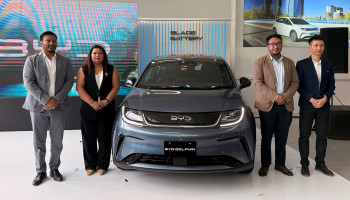
As Nepal accelerates into the electric era, that same question continues to sit at the top of every EV buyer’s mind. With the introduction of CATL’s Golden Shield Battery 2.0 in the latest Deepal EVs, that long-standing uncertainty begins to find a more convincing answer. This battery enters the market not with dramatic claims or marketing bravado but with measurable engineering evidence and a level of validation that demands serious attention. In a market where doubts about battery safety often overshadow enthusiasm for new technology, this shift is significant.

Golden Shield has demonstrated its capability under some of the toughest conditions in CATL’s laboratories. It has survived steel nail penetration without entering thermal runaway. It has remained stable after a full hour of water immersion with no ignition. It has withstood more than 140 seconds of direct flame exposure without exploding, a duration that is almost twice the benchmark required by international standards. These results are possible because of military-grade insulation materials, nano-fiber separators that tolerate extremely high temperatures, a honeycomb structural frame that adds strength and protection, and an intelligent monitoring system that reads cell behaviour in milliseconds. Golden Shield is not merely compliant. It is engineered to survive events that would overwhelm most conventional batteries.
Longevity is another area where Golden Shield resets expectations. Most EV batteries are designed to last between 1,200 and 2,000 charge cycles. Golden Shield is engineered for up to 5,000 full cycles. This translates to around 10 to 15 years of consistent use or nearly 10 lakh kilometres of projected real-world range. It is a figure that suggests the battery may outlast the vehicle it powers. This durability comes from refined LFP chemistry, advanced graphite materials that improve ion flow, and multi-gradient electrodes that slow natural degradation. Each cell is subjected to thousands of quality checks and monitored across more than ten thousand data points. This results in defect rates so low they are measured in parts per billion. For buyers who worry about long-term EV ownership and battery replacement costs, this becomes a substantial reassurance.

Charging performance, which often becomes the deciding factor for hesitant EV adopters, has also been addressed with confidence. Under ideal DC conditions, the battery can charge from 20 percent to 80 percent in around ten minutes thanks to 3C ultra-fast charging capability. Intelligent thermal management and cold-weather heating ensure stable performance even during Nepal’s colder months, where many EVs tend to struggle.
Where Golden Shield becomes particularly relevant for Nepal is in its ability to withstand diverse and challenging conditions. It has already been tested across a temperature range from minus 30 degrees to plus 60 degrees Celsius. It has gone through impact testing, vibration endurance, and long-distance stress simulations. These tests suggest that the battery is prepared for steep ascents in the mountains, the heat and humidity of the Terai, dusty rural routes, and the constant stop-and-go rhythm of Kathmandu traffic.
Golden Shield Battery 2.0 does not simply position itself as an advanced battery technology. It shows the engineering depth required to shift the public’s perception of EVs in Nepal. In a country where interest in electric mobility is rising but skepticism remains deeply rooted, this may be one of the most influential battery technology to enter the market so far.



Malaysia Becomes Xpeng’s First Right-Hand-Drive EV Production Base
All-New Kia Seltos Unveiled Ahead of January 2 Launch in India